


More than 8 million students with disabilities are served by our nation’s public schools. Since its creation in 1980, the U.S. Department of Education has provided expertise, funding, and enforcement for federal laws that provide protections and services for students with disabilities.
[Read more…] about ACTION ALERT: Preserve Protections for Students with DisabilitiesFood Resources for Denver Residents
Due to the continued federal government shutdown, people who rely on Supplemental Nutrition Assistance Program (SNAP) and Women, Infants and Children program (WIC) may not receive their full food benefits starting on November 1, 2025.
[Read more…] about Food Resources for Denver ResidentsDisability Policy Marches On
by Kaley Day
Colorado’s 2022 legislative session came to a close on May 11th. In a year where continued COVID recovery and an upcoming midterm election loomed, legislators across the aisle came together and championed efforts to advance inclusion, options, and services for individuals with disabilities. Thanks to the exhaustive work of self-advocates, families, community advocates and policymakers alike, five key bills made their way to the governor’s desk and will be highlighted below.
[Read more…] about Disability Policy Marches OnLegislative Wins and a Brighter Future
By Kaley Day and the Arc of Colorado
The 2021 Colorado legislative session began with uncertainty. Amid COVID protocols that required distancing and virtual testimony, economic concerns, and fear that any bill with a fiscal note may not make it to the governor’s desk, advocates and community members were unsure how far their efforts to promote legislation for the disability community would go. In the end there was cause for celebration as the session closed officially on June 8th and the state saw major legislation, some years and decades in the making, passed in order to support and advance the rights of Coloradoans with disabilities.
[Read more…] about Legislative Wins and a Brighter Future2020 Colorado Voter Guide for All
How to Vote
- Election Day is November 3, 2020! All registered voters should get a ballot in the mail in October.
- You can check your registration status here: https://www.vote.org/am-i-registered-to-vote/
- If you are not registered to vote, you can register up until Nov. 3rd and vote in-person that same day.
- Mail-in ballots must be received by Nov. 3rd to be counted. Mail back your ballot as soon as possible before October 24th.
- You have until 7pm on Nov. 3rd to drop-off your ballot or vote in-person.
- Drop-off boxes and polling centers can be found at: www.govotecolorado.gov or on your ballot
Accessible voting machines for people with disabilities are available at every polling center! Remember you must provide ID to vote in person. For a list of acceptable identification go to: https://www.sos.state.co.us/pubs/elections/vote/acceptableFormsOfID.html
[Read more…] about 2020 Colorado Voter Guide for AllHouse Bill Aims to Add Special Education Requirements to Educator License
Interview by Sarah Havlicek
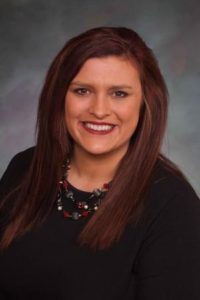
Bri Buentello, House District 19
House Bill 20-1128, Sponsored by Representatives Bri Buentello
(HD-47) and James Wilson (HD-60) in the House and Senators Rachel Zenzinger (SD-19) and Kevin Priola (SD-25) in the Senate, aims to add the requirement of at least 10 hours of professional development regarding the laws and practices of educating students with disabilities to educator licensing for teachers, special services providers, principals, and administrators.
The bill recently passed out of the House of Representatives and was introduced in the Senate and assigned to the Education committee. In an interview with Sarah Havlicek, Representative Buentello, a special education teacher herself, explains the necessity of the bill and ways it will improve special education practices for diverse learners in the state of Colorado.
[Read more…] about House Bill Aims to Add Special Education Requirements to Educator LicenseNational Arc Fights Court Decision to Invalidate the ACA
An Interview with Catherine Strode

The national Arc is fighting a 2018 ruling in a Texas U.S. District Court that determined the Affordable Care Act (ACA) unconstitutional. That case is now pending in the U.S. Court of Appeals for the Fifth Circuit. The Arc has joined 14 other national organizations representing people with disabilities in filing an amicus brief appealing to reverse the lower court’s decision.
The Chief Executive Officer of the Arc of the United States, Peter Berns, has called the lower court’s decision “an extraordinary threat” for people with disabilities and their families. He says if the ACA is taken off the books, it will set the advocacy efforts for individuals with intellectual or developmental disabilities (IDD) back 70 years.
Competency Bill Will Implement Mental Health Consent Decree Orders
An Interview with Catherine Strode
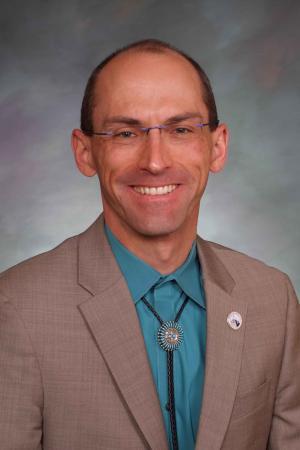
Disability advocates and the state of Colorado reached agreement last month in a legal battle over the long wait times for court-ordered mental health competency proceedings. A Consent Decree was entered into as a result of a lawsuit against the state by Disability Law Colorado. A bill introduced this Session creates alignment with the Consent Decree’s competency proceeding requirements and helps the state avoid violations and penalties.
Entitled, “Actions Related to Competency To Proceed,” Senate Bill 19-223, is a revised version of a competency bill that failed to pass in the 2018 Session. The bill’s sponsor, State Representative Mike Weissman, says the 2019 version has bipartisan support and has been worked on extensively over the past year. He is optimistic that it will win passage this year.
Bill Enacts Penalties Against At-Risk Adult Abuse Crimes
An Interview with Catherine Strode
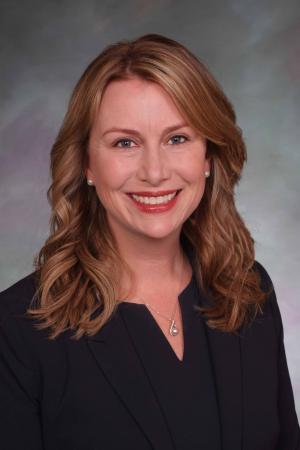
Last year, nearly one thousand cases of abuse against at-risk adults were reported in Colorado. In Denver, police report over a 200% increase in these types of crimes. Adult Protective Services estimate for every report of abuse against an at-risk adult, many more cases go unreported.
A Colorado legislator has introduced a bill to strengthen efforts to decrease crimes against at-risk adults. Senator Jessie Danielson is sponsoring Senate Bill 19-172 which makes it a Class 6 Felony to unlawfully confine an at-risk adult and a Class 1 Misdemeanor to unlawfully abandon an at-risk adult. Senator Danielson says this bill will cut down on this type of abuse of the most vulnerable Coloradans.
Mental Health Competency Addressed In Criminal Justice Bills
An Interview with Catherine Strode

It is estimated that the incidence of mental illness among prison inmates is three times more prevalent than in the general population. Nationally, more than a third of inmates are reported to suffer from some form of mental illness. Colorado statistics reflect nearly 40 per cent of the state’s inmates are in need of mental health intervention. A package of bills is being introduced this Session to address the issue of competency for individuals with mental illness in the criminal justice system.
Senator Pete Lee, Chair of the Senate Judiciary Committee, has been one of the architects of the bills. He says the goal is to establish a protocol where individuals in need of mental health care are identified and expediently moved out of the criminal justice system into community treatment care programs.